
Research
Below is a summary of the doctoral research carried out by Dr Bridget Alabi and which has strongly shaped the direction of her work in the service of women and the Church.
Title: What About Us? Uncovering Hidden Theological Voices of Catholic Women with Irregular Menstrual Cycles on Natural Family Planning

The Aim of the Research
Despite intense debates on the use of natural family planning (NFP) within the Roman Catholic Church particularly since the publishing of Humanae Vitae nearly 60 years ago, there is a deafening silence on the lived experience of women with irregular menstrual cycles who use NFP. The theological voices of these women, and in fact all women, are largely absent from NFP theology.
This absence becomes even conspicuous when we remember that:
- The teaching of NFP is predicated on the natural law and natural law is knowable to all (ST I-II, Q. 94, Art. 2) and can be interpreted even if imperfectly by the conscience (Hogan, 2000). This means that the theological understanding of women on NFP is an invaluable resource for NFP theology within the Catholic Church.
- NFP relies completely on women’s menstrual cycles, and it is difficult to see how any understanding of NFP could be complete without the input of women who experience menstruation.
Considering these arguments, I proposed that was important to include women’s theological reflections on using NFP and since there was very limited theological reflection in existing research, my research aimed to fill this gap.


How the Research was Carried Out
The research viewed women’s lived experience as a valuable source of theology and aimed to uncover their theological voices. It used Interpretative Phenomenological Analysis (IPA) methodology to help make sense of their lived experience. This allows the researcher to create space for participants to narrate and then make sense of their own experience. In this case, participants made theological sense of their post-partum NFP experience i.e. they unpacked what they believed God was telling them through their experience.
The research recognised that there were already theological voices in NFP within the Church such as the magisterium and the academia. Using the 4 voices of theology framework, it sought to understand how these voices worked together with the theological voices of the participants to create NFP theology within the Church. Also following a Catholic feminist approach of critical analysis and reconstruction, the research reframed existing NFP theology by bringing the women’s theological voices into dialogue with existing Church teachings and academic literature.
Research Findings
These include
that some of the women re-defined NFP to include non-medical family planning methods that worked with natural patterns of fertility. Also, contrary to the Church’s teaching that NFP unites couples, the study found that it exacerbated conflict particularly in sexually unsafe relationships. Many of the women also believed that using artificial contraception was not always a sin, and because God’s name is Mercy, He does not condemn women who use it in difficult situations.
Perhaps the most important finding was that
the women lamented the lack of fertility education and doctrinal/spiritual formation on NFP within the Church. The research identified two formative deficiencies that distort maternal theological voice: inadequate fertility formation, which renders their lived experience of NFP confusing, distressing or burdensome, and insufficient spiritual-doctrinal formation, which influences conscience and subsequently discernment. To be clear, these deficiencies do not silence or invalidate their theological voices. Their voices reflect, as they should, the current needs of the Church and act as a pointer to what direction the Church needs to take to support women in their motherhood vocation.
A need for intentional formation...
Women are not merely recipients of theological teaching but active interpreters of their motherhood vocation through their lived experience even if their theological voices have been largely absent from NFP theology. If their lived experience is to function as an authentic theological voice within the Church, there is a need for intentional formation that integrates fertility education with spiritual and doctrinal development. Listening to women’s lived experience is therefore not only a methodological choice but a theological necessity.
Interested in reading the entire thesis? Email [email protected] for a copy. Please put ‘thesis’ in the subject title of your email.




References & Bibliography
- Cameron, H., Bhatti D., Duce C., Sweeney J. and Watkins, C. (2010). Talking About God in Practice: Theological Action Research and Practical Theology. London: SCM, 2010.
- Hogan, L. (2000). Confronting the Truth: Conscience in the Catholic Tradition. New York: Paulist Press.
- John Paul II (1981) Familiaris Consortio. Accessed 5 December 2020. Vatican.va
- Paul VI (1968). Humanae Vitae. Accessed 1 December 2020. Vatican.va
- Smith, J. A., Flowers, P., and Larkin, M. (2021). Interpretative Phenomenological Analysis: Theory, Method and Research. (2nd ed.). London. Sage Publishing.
- ST I-II, Q. 94, Art. 2. Summa Theologiae First Part of the Second Part. Available at: https://aquinas.cc/la/en/~ST.I-II.Q94.A2.C Accessed 25 March 2026
- Swinton J. and Mowat H. (2016). Practical Theology and Qualitative Research. ProQuest Ebook Central.
- Watson N.K. (2003). Feminist Theology. Cambridge: Eerdmans Publishing Company.
About Dr Alabi
Dr Bridget Alabi DProf is a Catholic Motherhood Practitioner & Theologian. She holds a Professional Doctorate in Practical Theology. Her early career as a Health Geographer focused on understanding the socio-economic and environmental factors that influence health and disease, providing a strong foundation for her later work in fertility and maternal health.
Following a personal experience of stillbirth, her work shifted toward fertility, maternal health, and the theological meaning of motherhood. She later qualified as a fertility therapist and menstrual health practitioner.
Drawing on extensive research, professional training, and her work with numerous women, she developed The New Eve Method® to bring together all the important dimensions for holistic fertility. However, her doctorate research revealed that Catholic mothers struggled with body confusion and moral uncertainty which affected their ability to discern what God wanted of them in their motherhood vocation. This led her to expand the New Eve Method® to include a Marian spiritual formation of a sacramental life & doctrinal education.
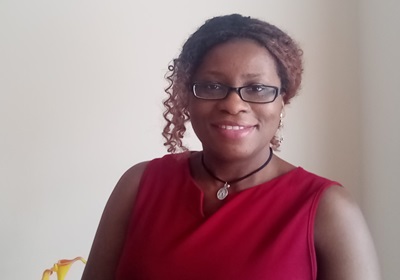
Dr Bridget Alabi (DProf. FRSPH, AHCP Reg.)
THE NEW EVE MOTHERHOOD ACADEMY
The Academy is Dr Alabi’s response to the need for motherhood support & formation for women. It is a platform designed to carry out research and provide holistic fertility formation & doctrinal/spiritual formation to Catholic women (and women who view motherhood as a vocation) so that they are better equipped to live their motherhood vocation.
GET STARTED BY CHOOSING AN OPTION BELOW:
The New Eve Guide
↓
A guide to support you to improve your fertility & recognise God in your motherhood experience.

The New Eve Motherhood Formation Hub
↓
An online platform dedicated to formation in conception, natural family planning, and motherhood.

Research Projects
↓
Get your voices heard on your motherhood experiences, sign up for one of our research projects.
Are you a Parish, Organisation or Women's Group?
Click here to invite Bridget to train pastors & leaders on how they can better support women in their lived fertility & motherhood experiences.